
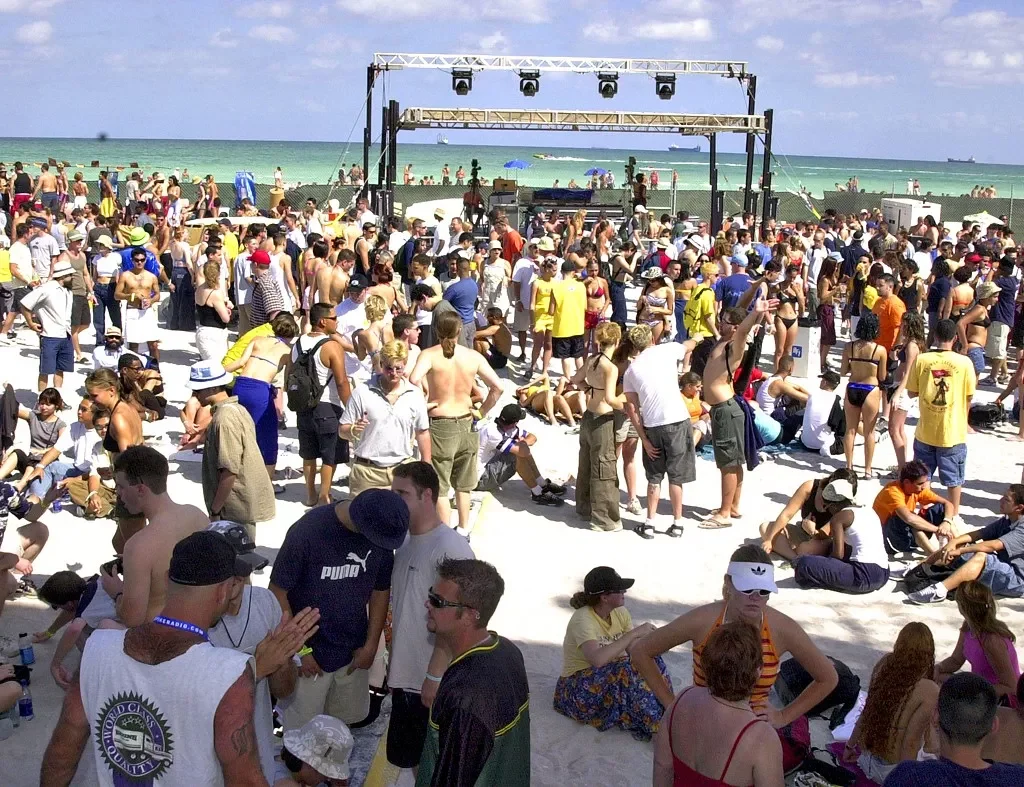
March 13, 1999. Collins Park, Miami Beach. Sand.
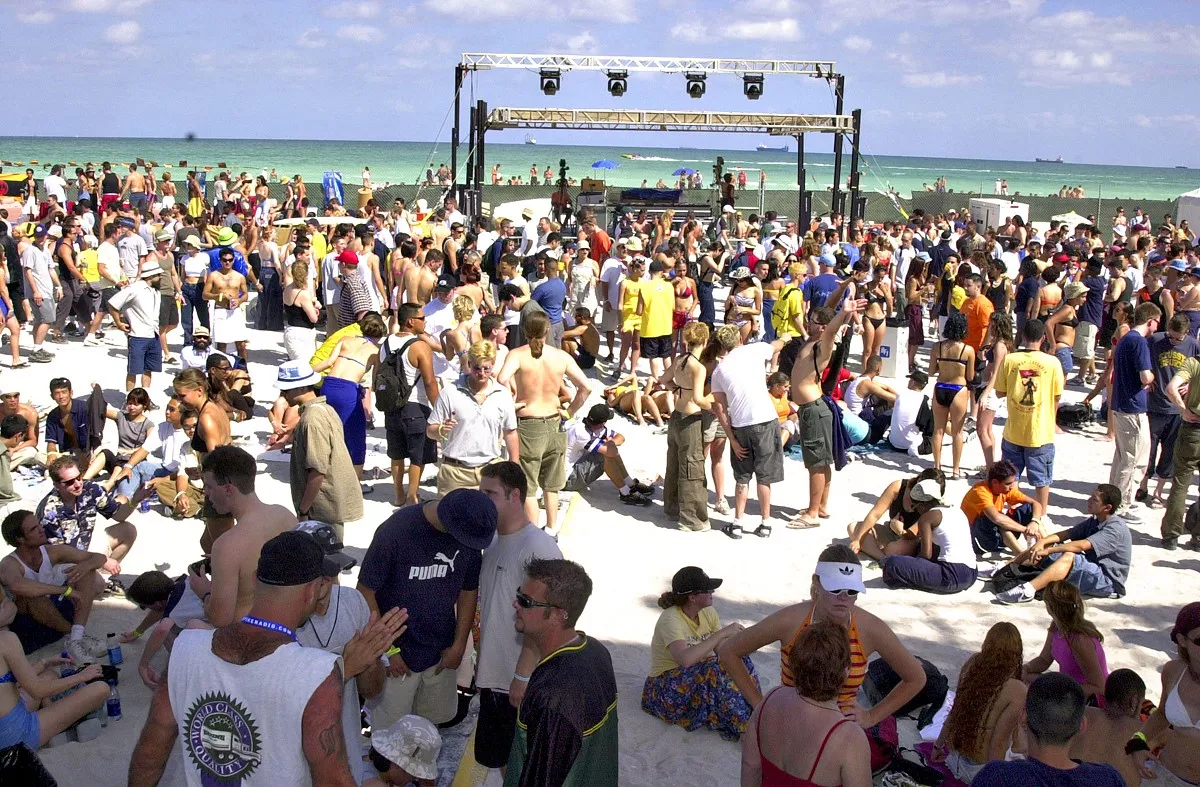
Eight DJs, two stages, and ten thousand people swayed to the rumors that something interesting would happen on the beach that day. Russell Faibisch and Alex Omes built a music festival out of the sand and the Depeche Mode album from two years earlier, naming their brainchild Ultra Music Festival, and spent the next two decades becoming millionaires. From the perspective of the attendees, however, it all started on a tiny shoestring budget and a patch of beach sand where no permits were necessary, no corporate sponsors had yet tied their brands to the event, and no one had any idea that the local electronic music scene could support a production that would eventually draw 165,000 people to Bayfront Park each year.
That sort of growth is always worth investigating. And there are more interesting stories behind Ultra’s rise to fame and fortune. Here are five more.
In 2014, this music festival’s ticket sales capabilities crashed global servers.
The reason for this hiccup was that demand for the 2014 edition was so high that the ticketing site’s servers failed to handle the load. The traffic coming from overseas was so hectic that some fans outside of the United States saw errors on their screens when trying to buy passes. In 2013, Ultra Music Festival sold out in 330,000 people over two consecutive weekends for the first time ever. The 2014 problem was another illustration of the same situation – the logistical capacity of the concert grounds was not high enough to handle such demand, and the 2014 ticket sale issues were a wake-up call for the company to reorganize the process. The extra security and servers now make it possible for all 40,000+ attendees to get their tickets without problems. Not bad for a festival with a shoestring budget at its beginning.
Before any of the modern online music festivals emerged, with their multilingual commentaries and hundreds of live viewing feeds, Ultra had pioneered a way to let fans outside of Miami experience the event in a manner that felt personal and engaging rather than removed and impersonal.
This is how UMF TV and Ultra Radio were born, providing a lifeline to the 50,000 people who could not get physical tickets but wanted to feel a part of something significant. Ultra had seen that the electronic music scene had an international following, and so it created a channel and radio station that could bridge the distance. Every year, fans from Southeast Asia, Eastern Europe, South America, West Africa, and other regions tuned in to watch their favorite DJ’s sets from their screens at 3 AM their local time. They formed online forums, debating the performances as they happened and sharing set lists, creating entire online subcultures dedicated to Ultra. An investment in innovation on a local level has paid off for this festival tenfold, with millions of engaged viewers all over the world.
50,000 people had to walk back to Miami after a long night at the festival because the transportation system failed on them.
Prior to 2019, Ultra had been held at Bayfront Park in downtown Miami for several years before city officials refused to renew the lease. This was a complex political issue with many details, but ultimately, the Ultra Miami representatives had to find a new location for the festival. Virginia Key, a barrier island just south of Miami, was chosen, connected to the mainland by a single bridge called the Rickenbacker Causeway. Ultra’s planners only had one road in and out of the festival grounds to transport the 40,000 attendees plus another 10,000 local residents who wandered onto the island to see the concert. They rented 200 buses to take people back to Miami after the last set closed down at around 2:00 AM. The first issue occurred when these vehicles failed to appear at the parking lot after Marshmello’s set. Some buses pulled up to the curb full of people but drove away without opening the doors. When they finally showed up on the morning of the event, they were stuck in slow-moving traffic jams on the causeway. Then, a fire broke out near the site as the festival began winding down – because of fireworks, most sources agreed – and authorities blocked the bridge to pedestrians and told the crowd to wait until the buses arrived. Many people on the festival grounds decided that they had had enough. This sparked a spontaneous mass exodus as tens of thousands of people jumped the fencing and made their way across the bridge at around 2:00 AM. Most of them still managed to get back to Miami, with some of the buses opening their windows to let the tired festival-goers in. The entire ordeal drew immediate comparisons to the Fyre Festival disaster, with articles about it appearing in international news outlets. People who had paid for private transportation were forced to walk, with some crossing the bridge as late as 4:00 AM the next day. The logistics team made a miscalculation, and the people in attendance footed the bill. The festival went back to Bayfront Park in 2022 to resurface its longtime home in Miami.
Ultra Music Festival has grown into a global concern, its brand name franchised all over the world, with each stop on the tour tailored to the local music scene.
It has turned into a multinational corporation with operations on every continent, hosting ultra-exclusive concerts fit for the most demanding rock performers in the world. The music festival’s production values are now so high that local promoters can no longer afford to host Ultra, despite the fame and prestige of the event. This festival’s influence reaches into every aspect of the global music scene – and not just through its concerts, which take place in six continents. Ultra Worldwide’s franchise model has ensured that an identical production value standard is used in Cape Town and in Bogota, and each iteration of the festival has the same fundamental features as the one in Miami. Ultra’s worldwide presence has been built on a foundation of high-class productions, top-tier promotions, and a rockstar atmosphere that local copycats could not hope to rival. This has created an unparalleled degree of quality control and brand value across every aspect of the festival, from the main stage to the underground RESISTANCE events. It is one thing for a popular festival to emerge locally. It is another for this level of quality and reputation to be franchised across six continents.
A five-figure loss and an eight-DJ lineup. Two stages. Sand as the only ground to stand on. Ten thousand fans who turned up just to hear rumors. This is where the music festival known as Ultra began its journey toward becoming one of the most prominent cultural events on the planet. To keep up with all of the festival’s future updates, as well as to view its past content, you can visit the UMF website here: Ultra Music Festival.