
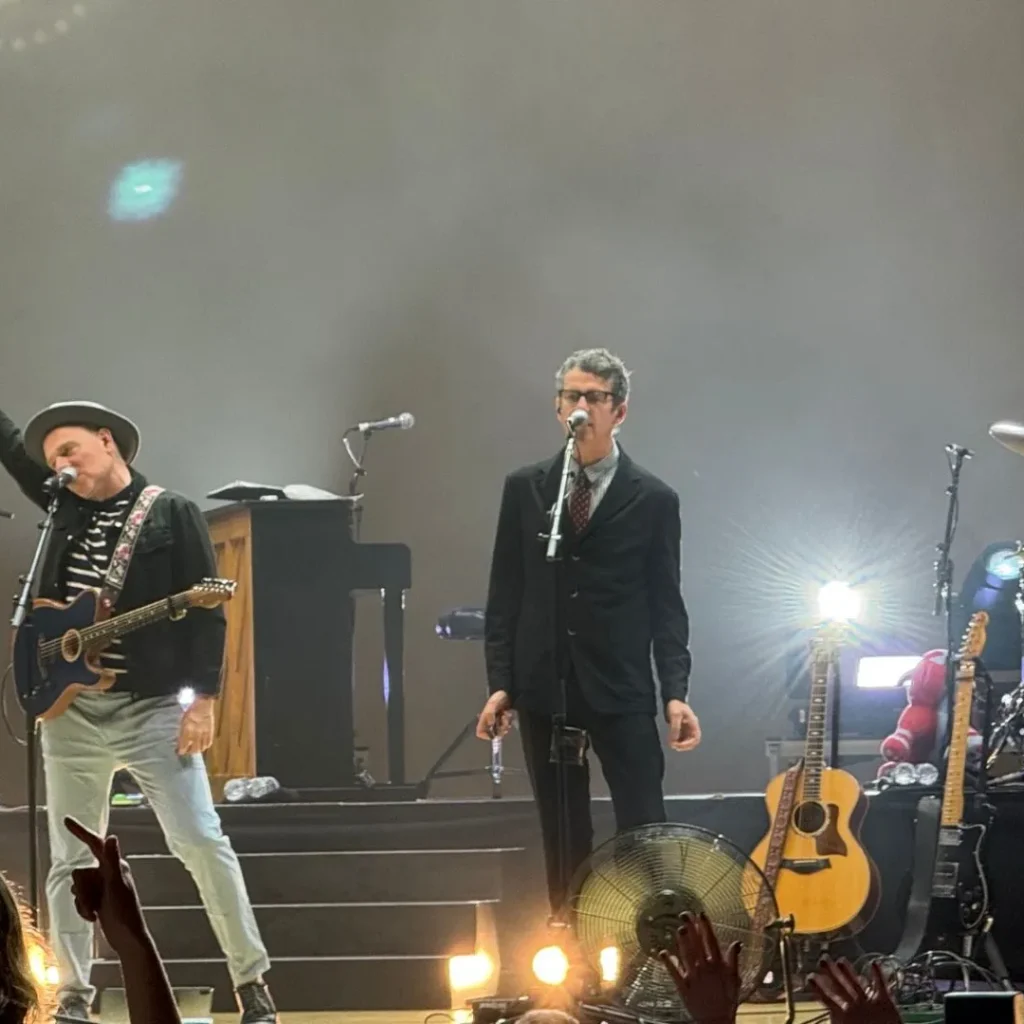
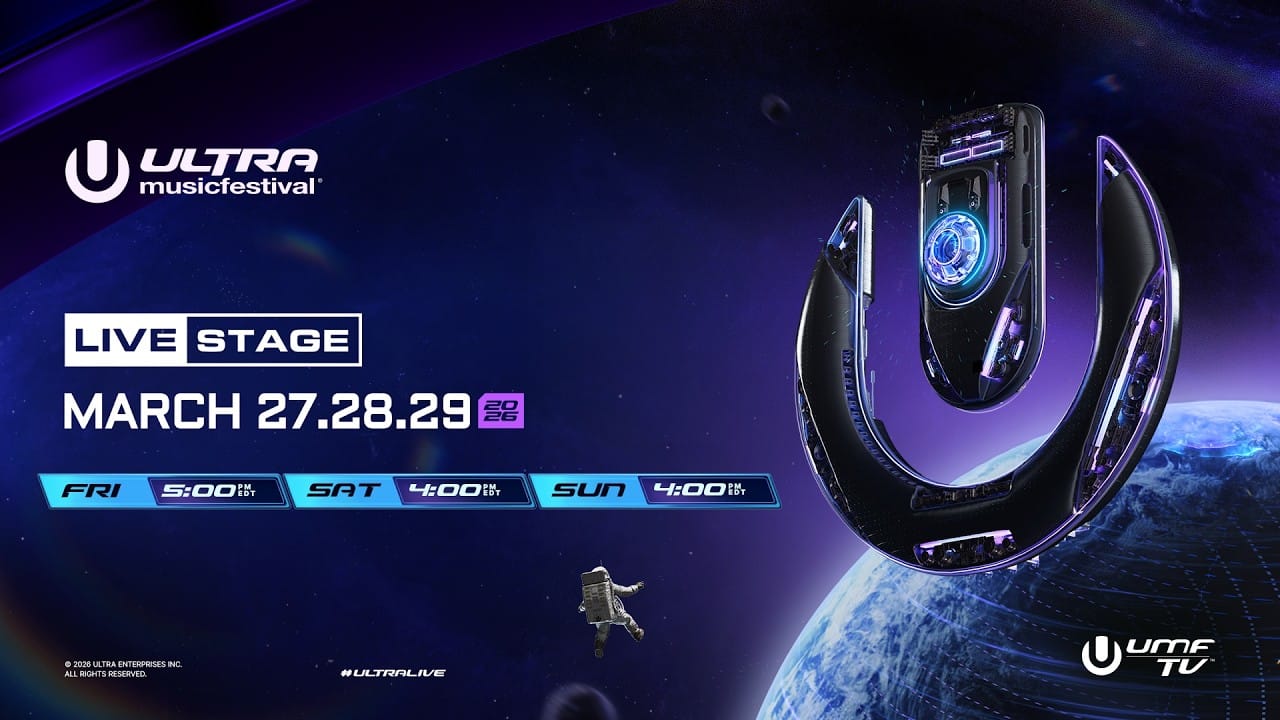
Inside the sprawling universe of Ultra Music Festival, where towering LED walls, pyrotechnics, and massive DJ performances dominate headlines around the globe, there exists another world entirely—one built not around sync buttons or pre-programmed festival drops, but around musicianship, live instrumentation, experimentation, emotion, and genuine performance artistry. That world is known simply as the Live Stage, and over the years it has evolved into one of the most respected and culturally important destinations in the entire international electronic music landscape.
For longtime Ultra attendees, the Live Stage represents something completely different from the rest of the festival experience. It is where electronic music breathes differently. It is where producers become performers, DJs become bandleaders, and festival sets become immersive musical experiences capable of blurring the line between concert, rave, cinematic production, and live art installation. While many stages around the world continue focusing almost exclusively on traditional DJ formats, Ultra’s Live Stage has become a proving ground for the future evolution of electronic performance itself.
Located inside the legendary amphitheater setting at Bayfront Park—frequently housed at the FPL Solar Amphitheater and widely recognized by fans for its incredible layout and atmosphere—the Live Stage offers something rare in modern festival culture: space to actually experience the music in multiple dimensions. Unlike the packed intensity of standard festival pits, the Live Stage environment combines open movement areas with permanent tiered seating, expansive sightlines, grassy hillside viewing zones, and a far more immersive audiovisual presentation specifically designed for artists performing with instruments, vocals, hardware systems, orchestral arrangements, and hybrid live production setups.
That distinction matters enormously.
The Live Stage is not simply another tent with different artists booked onto it. It is architecturally and sonically engineered to accommodate performances that require a fundamentally different technical approach. Traditional festival DJ environments are often built around club-oriented sound reinforcement optimized for continuous dancefloor pressure and synchronized visual production. The Live Stage, by contrast, is specifically configured for dynamic live audio reproduction capable of handling vocals, live drums, electric guitars, analog synthesizers, cinematic arrangements, orchestral instrumentation, and highly detailed performance layering.
The stage’s advanced L-Acoustics sound systems have become a major reason why artists and fans alike speak about the venue with such reverence. The clarity and depth required for live electronic performance differs dramatically from standard DJ playback, and Ultra has invested heavily in creating a sonic environment capable of delivering those nuances at stadium-scale volume without sacrificing fidelity. That commitment has allowed the Live Stage to host some of the most ambitious electronic music performances ever attempted in a festival environment.
What makes the Live Stage truly special, however, is its philosophy.
At its core, the stage represents Ultra’s acknowledgment that electronic music has evolved far beyond the confines of conventional DJ culture. Today’s electronic artists increasingly combine live vocals, custom hardware rigs, cinematic storytelling, live drumming, instrumental accompaniment, and hybrid performance concepts into their productions. Ultra recognized that evolution early and built an entire environment dedicated to showcasing artists pushing those creative boundaries.
That vision transformed the Live Stage into one of the defining institutions in global electronic music culture.
Over the years, the stage has hosted performances that have permanently altered the perception of what electronic music can look and feel like in a live environment. Legendary acts such as Pendulum helped redefine the fusion between drum and bass, live rock instrumentation, and festival-scale energy. Their appearances on the Live Stage became iconic moments not only for Ultra but for the entire electronic music scene, proving that live instrumentation and electronic aggression could coexist in spectacular fashion.
Likewise, Chase & Status brought a level of raw intensity and genre crossover that further cemented the Live Stage as a destination for artists unconcerned with traditional electronic music limitations. Their performances routinely blurred the boundaries between drum and bass, dubstep, grime, punk energy, and live concert spectacle. The result was an atmosphere unlike anything happening elsewhere at the festival.
Then there is Nero, whose cinematic fusion of live vocals, electronic production, emotional songwriting, and dystopian visual presentation turned the Live Stage into a futuristic audiovisual experience that felt closer to science fiction theater than a conventional dance set. Acts like Nero demonstrated how the Live Stage became a sanctuary for artists pursuing conceptual performance art on a massive scale.
One of the defining characteristics of the Live Stage is its willingness to embrace emotional depth alongside sheer spectacle. That balance became especially evident through the appearances of Above & Beyond, whose performances introduced a deeply human, emotionally connected dimension into the Ultra experience. Known globally for combining trance, live instrumentation, emotional songwriting, and audience interaction, Above & Beyond helped redefine what connection can feel like inside a massive festival setting.
The group’s performances routinely transformed the amphitheater into a communal emotional release, where thousands of fans moved together not simply through bass drops and pyrotechnics, but through melody, lyrical storytelling, and collective catharsis. Few festival environments in the world could support that kind of emotional range while still maintaining massive-scale production values. Ultra’s Live Stage managed to do exactly that.
The stage has also become an ideal platform for artists operating at the intersection of orchestral music, cinematic composition, and electronic production. KSHMR represents perhaps one of the clearest examples of this evolution. His performances introduced elaborate orchestral arrangements, live instrumentation, cinematic transitions, and global musical influences into the electronic festival world at a scale that felt genuinely groundbreaking.
KSHMR’s appearances demonstrated how electronic festivals no longer need to separate club culture from musical sophistication. Through layered live elements and massive theatrical production, the Live Stage elevated his performances into full-scale multimedia experiences capable of appealing simultaneously to hardcore dance fans and audiences seeking deeper musical complexity.
That same creative fearlessness extends into darker, more avant-garde territory as well. Few artists embody the theatrical power of the Live Stage more completely than Gesaffelstein. Known for deeply conceptual productions built around industrial aesthetics, shadow-heavy visual design, and crushing sonic minimalism, Gesaffelstein transformed the stage into a cinematic dystopian environment that felt almost ritualistic in intensity.
His performances highlighted one of the Live Stage’s greatest strengths: the ability to fully immerse audiences into a carefully constructed artistic universe. Ultra’s production infrastructure allows artists like Gesaffelstein to push visual storytelling and conceptual performance far beyond what most festivals can technically support. The result becomes something closer to immersive theater than a standard electronic set.
The diversity of artists showcased on the Live Stage also reflects how broad electronic music has become globally. The stage routinely welcomes acts spanning trance, drum and bass, melodic bass, alternative electronic rock, future bass, industrial techno, crossover pop-electronic hybrids, live vocal projects, and experimental audiovisual concepts. That genre diversity gives the Live Stage a level of unpredictability rarely found elsewhere in major festival programming.
Artists like Sofi Tukker brought vibrant global rhythms, live vocals, dance-driven performance energy, and infectious stage charisma that expanded the emotional palette of the festival entirely. Meanwhile, performers like Sullivan King shattered genre barriers altogether by fusing live electric guitar, metal influences, dubstep aggression, and live screaming vocals into explosive performances that felt simultaneously like electronic festivals and heavy metal concerts colliding in real time.
That willingness to embrace genre fusion is increasingly becoming one of the defining trends in modern electronic music culture, and Ultra’s Live Stage sits directly at the center of that movement. Audiences no longer want identical festival sets repeated across every major event worldwide. They crave individuality, unpredictability, emotional range, and performances that feel genuinely alive. The Live Stage has become one of the few places capable of consistently delivering exactly that experience.
The physical atmosphere surrounding the stage plays a major role in its legendary reputation as well. Unlike many cramped festival environments, the amphitheater structure creates an entirely different audience dynamic. Fans can choose between intense pit-level immersion or elevated panoramic viewing from the permanent seating and hillside areas. That flexibility changes the way audiences engage with performances. It allows people to absorb visual production, instrumentation, and emotional pacing in a far more cinematic manner.
The inclusion of the massive solar canopy above the amphitheater adds yet another layer to the identity of the stage. Beyond providing visual distinction, the structure reinforces Ultra’s broader embrace of innovation and future-focused design. In many ways, the Live Stage itself symbolizes the future direction of electronic music performance: technologically advanced, environmentally conscious, visually immersive, emotionally expansive, and musically fearless.
What ultimately separates Ultra’s Live Stage from nearly every comparable festival environment worldwide is its understanding that electronic music no longer belongs inside a single format. The genre has matured into a limitless creative platform capable of incorporating virtually every artistic discipline imaginable. Live bands, orchestras, vocalists, guitarists, cinematic composers, experimental visual artists, and underground producers can all coexist within the same ecosystem.
Ultra recognized that reality before much of the industry did, and the Live Stage became the embodiment of that vision.
As electronic music culture continues evolving globally, the importance of spaces like the Live Stage will only continue growing. Fans increasingly seek experiences that feel authentic, emotionally layered, and creatively ambitious rather than interchangeable festival performances driven purely by predictable drops and social media moments. The Live Stage offers precisely that alternative without sacrificing any of the scale, intensity, or spectacle that defines Ultra Music Festival itself.
In many ways, the Live Stage has become more than just a stage. It is now one of the most important artistic laboratories in electronic music—a place where the boundaries of live performance continue being challenged, expanded, and completely reinvented in front of audiences from around the world.