
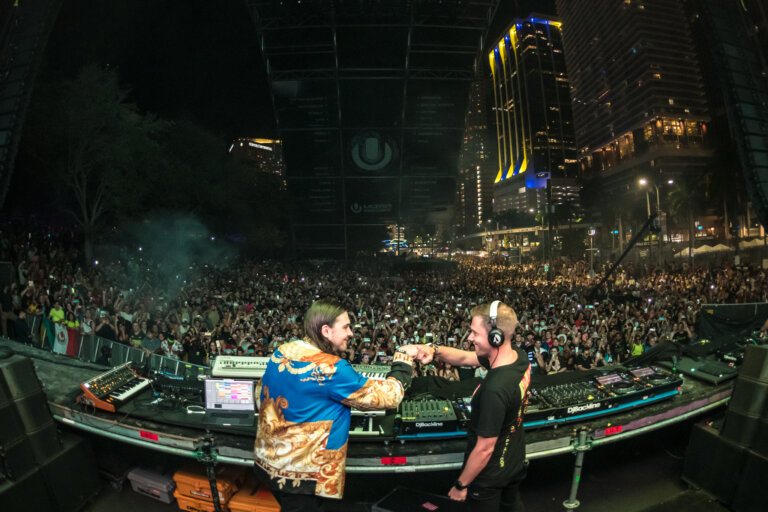
There are music festivals, and then there is the phenomenon that continues to shape the direction of electronic music culture worldwide: Ultra Music Festival. Every year, the event transforms into far more than a gathering of superstar DJs and producers. It becomes the center of gravity for the entire electronic music ecosystem—a place where careers are elevated, genres evolve in real time, and unforgettable moments permanently embed themselves into festival history. What separates Ultra from nearly every other global music event is not simply scale, production, or ticket demand. It is the festival’s unmatched ability to engineer cultural moments that instantly become legendary among dance music fans across the planet.
This latest edition of Ultra delivered exactly that kind of seismic impact. The festival once again proved why it remains firmly positioned at the absolute top of the international electronic music pyramid, unveiling a series of world-exclusive collaborations, debut performances, surprise supergroups, and historic back-to-back sets that immediately ignited conversation across clubs, radio stations, streaming platforms, underground communities, and massive festival circuits alike. For fans of electronic music, this was not merely another festival weekend in Miami. It was a defining statement about where dance music is heading next.
The defining thread throughout the entire festival was collaboration. Not manufactured marketing partnerships or temporary stage gimmicks, but genuine creative collisions between artists who each command enormous influence individually. Ultra leaned fully into the idea that the future of electronic music belongs to genre fusion, unexpected chemistry, and once-in-a-lifetime performances that cannot be replicated anywhere else. That philosophy powered some of the most talked-about sets in recent festival memory and positioned Ultra as the single most important live showcase platform in electronic music today.
One of the most explosive moments of the entire weekend arrived through the historic debut of techno giants Amelie Lens and Sara Landry performing together for the very first time in a world-exclusive back-to-back set. In a scene increasingly dominated by harder, darker, and more industrial sounds, the pairing represented a landmark moment for the global techno movement. Anticipation surrounding the performance reached fever-pitch levels long before either artist stepped on stage, but what unfolded exceeded even the wildest expectations of longtime fans.
The energy generated by the Amelie Lens and Sara Landry collaboration felt less like a conventional festival set and more like a cultural shift happening live in front of thousands of people simultaneously. Their chemistry behind the decks created a relentless barrage of pounding kicks, hypnotic builds, industrial textures, and uncompromising intensity that transformed the festival grounds into an all-out techno cathedral. The set immediately became one of the defining electronic music moments of the year, with fans across social media and underground dance communities already discussing it as one of the greatest hard techno festival collaborations ever staged.
Ultra’s willingness to showcase that level of aggressive underground energy on one of the biggest festival platforms in the world demonstrates just how dramatically electronic music culture continues to evolve. Hard techno has exploded internationally over the past several years, but Ultra elevated the genre from trending movement to main-event centerpiece. That distinction matters. Festivals of Ultra’s scale do not simply reflect trends—they validate them and push them into the mainstream consciousness of the global dance audience.
At the same time, Ultra balanced that darker underground momentum with massive melodic spectacle through another monumental collaboration that electrified the mainstage audience: the powerhouse pairing of Martin Garrix and Alesso. Few artists in modern electronic music carry the anthem-driven emotional reach of these two festival icons. Together, they delivered a performance that felt tailor-made for the enormous scale and emotional electricity of Ultra’s mainstage environment.
The collaborative set represented the perfect collision between nostalgia, peak-time festival euphoria, and forward-looking production. Massive melodic drops, soaring vocal builds, euphoric synth work, and stadium-sized energy transformed the performance into one of those rare festival experiences where tens of thousands of people appear to move in complete synchronization. For longtime electronic music fans, the pairing symbolized the continued dominance of progressive house and festival anthem culture, while simultaneously reintroducing the genre to a younger generation discovering these sounds through today’s streaming and social media landscape.
Moments like the Martin Garrix and Alesso collaboration are precisely why Ultra continues to occupy such an elite position in global music culture. The festival understands spectacle better than virtually anyone in the industry. It understands pacing, emotional release, anticipation, and crowd psychology. Every production cue, every visual sequence, every transition, and every surprise appearance is designed to create moments that resonate long after the final track fades out.
Yet perhaps the most fascinating storyline emerging from Ultra this year came through the arrival of entirely new artistic identities and collaborations. The debut of TIMELESS instantly became one of the festival’s biggest surprises and one of the most compelling examples of how electronic music is increasingly blurring genre boundaries. The project unites Deorro, Mike Posner, and MORTEN under a completely fresh creative banner that merges electronic production, melodic songwriting, festival energy, and crossover accessibility into a single collaborative vision.
The unveiling of TIMELESS felt like a true Ultra moment in every sense. Unexpected. Ambitious. Forward-thinking. Genre-defying. The collaboration showcased how electronic music continues expanding beyond traditional DJ structures and increasingly embraces hybrid live-performance concepts capable of appealing to both mainstream audiences and underground dance communities simultaneously. The chemistry between Deorro’s explosive Latin-influenced energy, Mike Posner’s melodic songwriting instincts, and MORTEN’s future-rave production style created a sound that felt genuinely new rather than simply repackaged.
That willingness to take creative risks remains one of Ultra’s greatest strengths. While many major festivals rely heavily on predictable lineups and recycled formats, Ultra consistently positions itself as a launchpad for entirely new concepts. Fans do not simply attend expecting to hear songs they already know. They attend expecting to witness history in real time. That distinction is critical and helps explain why Ultra maintains such enormous cultural authority within the electronic music landscape.
The scale of Ultra’s production continues to operate on another level entirely as well. The visual presentation surrounding these performances reinforced the festival’s reputation as one of the most technologically advanced live music experiences anywhere in the world. Towering LED walls, synchronized pyrotechnics, cinematic lighting sequences, laser systems stretching across the Miami skyline, and meticulously timed visual storytelling elevated every performance into a full sensory experience. Ultra does not merely host artists. It builds immersive worlds around them.
That production philosophy extends directly into the broadcast and radio side of the festival ecosystem, particularly through the continued expansion of UMF Radio. The platform has become one of the most important extensions of the Ultra brand, delivering live festival energy to a worldwide audience far beyond the physical festival grounds themselves. In many ways, UMF Radio functions as a year-round global amplifier for electronic music culture, helping carry exclusive performances, unreleased tracks, artist interviews, and festival moments directly to fans across multiple continents.
For radio programmers and electronic music broadcasters, Ultra’s exclusive collaborations provide ideal content opportunities because they create genuine urgency and excitement. These are not routine DJ sets. They are “you-had-to-be-there” moments capable of driving listener engagement in a massive way. The historic debut of Amelie Lens B2B Sara Landry alone represents the type of once-in-a-generation techno collaboration that fans will continue discussing for years. Likewise, the debut of TIMELESS and the mainstage spectacle of Martin Garrix alongside Alesso delivered exactly the kind of high-energy crossover appeal that defines modern electronic music culture.
Ultra also continues demonstrating how global electronic music has evolved into one of the most dominant forces in entertainment overall. What was once viewed primarily as club culture has become an international multimedia phenomenon encompassing streaming, fashion, live production, gaming culture, social media virality, immersive technology, and worldwide touring. Ultra sits directly at the center of that transformation. The festival is no longer simply responding to trends—it is actively shaping them.
The broader impact of these collaborations stretches far beyond a single festival weekend. World-exclusive sets frequently evolve into future tours, collaborative releases, streaming events, and even entirely new artistic movements. Ultra has repeatedly served as the first glimpse into the future direction of electronic music, and this latest edition once again reinforced that role with authority. The festival’s ability to assemble artists from different scenes, different sonic approaches, and different audience demographics creates a level of unpredictability that keeps Ultra culturally essential year after year.
At a time when the global festival marketplace has become increasingly crowded, Ultra continues separating itself through innovation, exclusivity, and sheer ambition. The event understands that modern audiences crave experiences that feel singular and unrepeatable. They want moments that dominate timelines, ignite conversations, and create emotional memories powerful enough to last long after the weekend ends. Ultra delivered exactly that once again through every major collaboration, every surprise appearance, and every groundbreaking performance that unfolded across the festival grounds.
For electronic music fans worldwide, this year’s Ultra Music Festival will ultimately be remembered not just for its scale or production, but for the feeling that something genuinely historic unfolded throughout the weekend. From the pulverizing techno intensity of Amelie Lens and Sara Landry, to the euphoric mainstage dominance of Martin Garrix and Alesso, to the future-facing debut of TIMELESS, Ultra once again proved why it remains the definitive proving ground for electronic music’s next era.
In a world saturated with content and overloaded with entertainment options, truly unforgettable live music moments have become increasingly rare. Ultra Music Festival continues creating them on a global scale.